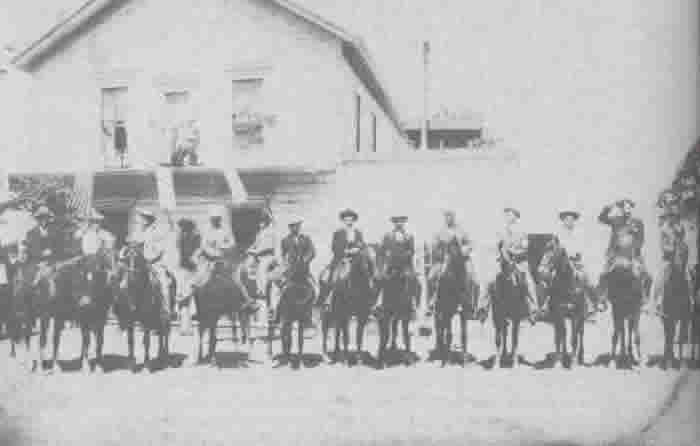
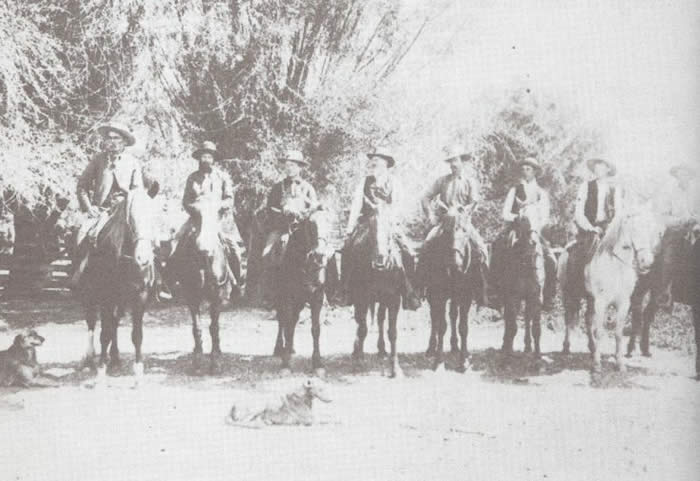
RESIDENTS OF PUEBLO DE LAS JUNTAS
[Before 1810 – 1879]
"the mestizo village of Las Juntas near Mendota" [Saga: Latta p 229]
Stanley A. Lucero, Madera, CA
Updated December 3, 2013Go to the following Blog by California's First Families
to read more information about
Las Juntas Cemetery and the Pueblo de Las Juntas
Figure 1: A fresno [ash] treeFor more information about Pueblo de Las Juntas, refer to my powerpoint
“Pueblo Las Juntas [Fresno City].” [2010]
1st draft
Pueblo de Las Juntas [September 14, 2013]
Workshop presentation at
4th Annual Nueva Galicia Genealogical Society Conference
Surnames of Residents of Las Juntas
This is a Microsoft Excel spreadsheet document.
Columns include: Resident, Name, Parents, Spouse, Born, Death,
Cloud page, Latta page, Garza page, and St. Mary
The document contains residents of Las Juntas, their ancestors, and descendants.
This is a work in progres
See Facebook Group Pueblo de Las Juntas
If you have a Facebook account, I encourage you to join this group
See Firebaugh Families virtual cemetery
http://www.findagrave.com/cgi-bin/fg.cgi?page=vcsr&GSvcid=237347
See Las Juntas Cemetery (defunct):
See Pueblo de Las Juntas Family Tree on ancestry.com:
http://trees.ancestry.com/tree/20901448/family
Kahwahchu [Grass Nut Place]
"One [of] their village' name Kahwahchu (Kah-wah-choo) (Meaning Grass Nut Place) right where they had that Mexican town, Las Juntas, just where Fish Slough, China Clough, and Joaquin River go together. White people put big dam there in San Joaquin River." [Yokut: Latta p 146] "Until about 1854 a larger group [native Indians] lived at Las Juntas where Mendota Dam now is located." [Yokut: Lattta p 731] "From the Los Banos Creek, we cut east to the west bank of the San Joaquin and spent one night at the Juntas where Mendota Dam is now. There we had to stand guard all night against a mixture of Indian and Mexican cattle thieves." [Yokut: Latta p 740]
Overview
The Pueblo de Las Juntas was established before 1810 by the early Californios and the residents evicted by Miller & Lux in 1879. Las Juntas was situated in current day western Fresno County [California] where the Fresno Slough and the San Joaquin River meet and some “fresnos” [ash trees] were growing. Sometimes Pueblo de Las Juntas was called Fresno. Another town called Fresno City was by Tranquility. Pueblo Las Juntas was the terminal point for California river boats. In 1862 the steamboat Alta was mired in the dry San Jose slough. The Butterfield Overland Stage stopped at Las Juntas between 1857-1860.Current day Fresno, California was settled much later at a different location by the “fresnos” near the east side the San Joaquin River. Fresno was established after 1867 and laid claim to the name of Fresno.
The original pioneers of Las Juntas followed el Camino del Diablo in carts and on horseback. Many of the pioneers were involved in capturing wild horses and then driving them to Mexico for sale. By 1950 the population of Las Juntas was 250. The first residents of Las Juntas were native Indians and early California pioneers. 1849 and the Gold Rush brought in settlers from Sonora, Mexico.
In 1879 Miller & Lux acquired the land occuped by Las Juntas and evicted all residents. By then, many of the Las Juntas men were employees of Miller & Lux at his cattle ranches. About 200 residents of Las Juntas moved to Firebaugh. The rest scattered throughout the valley [Los Banos, Mendota, Visalia, Bakersfield, etc.] Some of the occupations of the residents of Pueblo de Las Juntas include: merchant, butcher, blacksmith, vaquero, packer of supplies, saddle maker, and cook. Many of the men of Las Juntas worked at the old ranches in Fresno and Kern County: Rancho El Tejon, Rancho La Liebre, Rancho New Colombia, Rancho Old Colombia, Rancho Pozo, and Rancho San Emigdio.
Murrieta Gangs 1849-1853
Some of the residents of Las Juntas were involved with some of the five Murrieta Gangs led by Joaquin Murrieta [El Famoso], Joaquin Valenzuela, Joaquin Manuel Carrillo Murrieta or Joaquin Juan Murrieta around the dates of 1849-1853. Following the Battle at the Cantúa [1853], the Murrieta gang members disappeared throughout California, Arizona, Sonora and other unknown places. The original settlers of Las Juntas remained in Las Juntas after 1853.
After 1848 Treaty of Guadalupe Hidalgo
The residents of Las Juntas automatically become US citizens following the 1848 Treaty of Guadalupe Hidalgo unless they chose to move to Mexico within one year. Hoever, only a few of the men are listed on the Great Register for Mariposa county and Fresno County before 1880. I have found a few individuals who became naturalized citizens in the 1870s and 1880s. I am still searching for a Mexican or U.S. Census of Las Juntas.
Location
Pueblo de las Juntas was "north of present Mendota." [Hoover 1958, p. 89] “Today all that is left of Pueblo Las Juntas is a solitary grave marker for a little girl.” [Clough 1984] Las Juntas is under the water canal between Firebaugh and Mendota.
"Las juntas (the meeting place) is located between firebaugh and mendota between the outside canal and delta mendota canal. Most of the area was excavated when the canals were built. There was a grave site that was fenced still there a few years ago. don't know how the grave remained but was told it was found by the canal builders and replaced." [posted on Facebook in Aug 1013 by R.T.]
Families identified
The following is a list of some of the families who have been identified by either Clough & Secrest, Frank Latta, Las Juntas Cemetery (defunct), and comments from descendants of Las Juntas familis as living in Pueblo de Las Juntas sometime between 1810 and 1879. About 1930, Frank Lopez moved the burials with markers in the old Las Juntas cemetery to a location about a mile and a half south of Firebaugh. The cemetery was moved again about 1989 when Toma Tek purchased the land containing the old Firebaugh cemetery. A memorial plaque is by the flag pole at the entrance of Toma Tek.
"I thought there were some old grave markers just off the turn off to the tomato plant south of Firebaugh for years. Is that the little cemetary you are speaking of? Might be long gone with the Tomato plant owning the area." [posted on Facebook in Aug 2013 by S.K.]
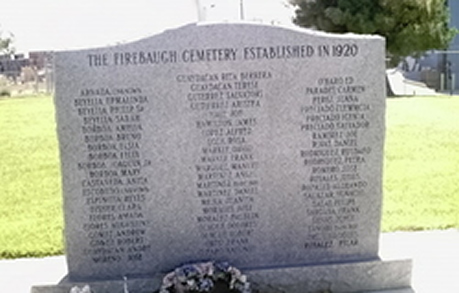
List of residents of Pueblo de Las Juntas
The following is a list of some of the families and individuals who lived in Las Juntas. Also included are individuals buried at the Juntas Cemetery. [See Las Juntas Cemetery (defunct) maintained by Sheila Ruiz Harrell]
Families who lived in Las Juntas
ACEVEDO & CUELLAR
Acevedo, Claudio [Acebedo] - [b. 1818 near Las Trincheras, Sonora, Mexico. d. 1853 Monterey, CA] Claudio came to Alta California with Joaquin Murrieta and joined him in hunting down the mining mob that killed Joaquin’s half brother Jesus Carrillo Murrieta and raped Joaquin’s wife Rosa Feliz. (Latta, 1980, p 95). "Claudio was a married man when he came to prospect for gold in 1849. He left his wife, Cresencia Cuellar, and four sons, Gerardo, Claudio, Reyes and Francisco in Tubutama, Sonora, Mexico." [Garza p 90]
.AGUIRRE & MELENDEZ
Aguirre, Pedro – (1836 Chihuahua, Mexico. d. 1893 Madera County. Married 1873 in Madera County to Audelia Melendez. Lived in Hornitos in 1873. Pedro was born about 1837 in Mexico and became a naturalized USA citizen on Sept. 4, 1865 [Mariposa, CA records]. On July 2, 1879 Pedro registered to vote as a merchant in Borden, CA. 1880 Borden Census: Pedro Aguirre age 44 Butcher; wife Audelia age 25 born in California; Children – Narcisa age 4, Victor age 2, and Audelia ½ month old. Possibly the owner of the Aguirre store at Rancho de los Californios [see picture on p 94 Latta, 1980] [Sources: Latta, 1989, p 94; Pueblo de las Juntas Family Tree.]
Melendez, Audelia (b. 1855, Sonora, CA. d. 1937 Madera) Daughter of Lorenzo Melendez [Melendrez] and Anastacia Leyva. Married Pedro Aguirre 1873 in Madera County. Married Joseph M Moreno 1898 in Madera County. [Source: Pueblo de las Juntas Family Tree]
ARREDONDO & MARTINEZ
Arredondo, Jose S – (b. 1936 Chile. d. 1916 Madera) Married to Teodora Martinez, widow of Gregorio Yñigo, 1857 in Caborca, Mexico. José was the 2nd husband of Teodora Martinez. They moved from Las Juntas to Borden in 1880 and to Madera in 1900. In the 1898 Greater Register of Madera, County, California Jose was 64 years old, born in Chile, 5'-4 1/2" tall, dark complexion, brown eyes, gray hair, occupation of Laborer, naturalized Jan 31, 1881 Fresno CA. Jose was still registered to vote in Madera at the age of 75. Jose died 17 Dec 1916 in Madera. [Source: Latta 1980; Pueblo de las Juntas Family Tree; & Sheila Ruiz Harrell]
Martinez, Teodora – (b. 1827 La Cienaga, Sonora. d. 1931 Madera) Teodora was one of Frank Latta’s primary sources of information. Page 28: “Teodora Arredondo at the age of 101 years and entirely blind. She rode horseback from Caborca to California in 1847, back to Caborca [on] horseback in 1854 and back to California again in 1857. On this trip she also rode horseback and carried a two-month-old baby in her arms – each time traveling over the dreaded Camino del Diablo. Her first husband, Yñigo, packed for theMurrieta Gang for more than three years and she accompanied him much of the time.” [Latta 28-29] Gregorio & Teodora had a daughter, Matilde, who was born in Caborca. Teodora remarried in Caborca to Jose S. Arredondo from Chile. Jose & Teodora were living in Borden in 1880. In 1900 they were living in Madera. The 1910 Census still has Jose & Matilde living on N Street in Madera with Jose’s occupation listed as Tamale manufacturing. After Jose’s deathTeodora lived with her son-in-law [Ambrosio Ribera] and her daughter Matilde in Madera [1920 Census]. [Sources: Frank Latta, 1930; Pueblo de las Juntas Family Tree]
BORBOA & BUELNA
Borboa, Escolastico - (b. 1840 Sonora. d. 1925 Fresno) See Calvary cemetery memorial. "I am a native of Firebaugh, whose great grandfather, Escolastico Borboa, lived and was married in Las Juntas before being relocated to Firebaugh. Many of the members of the Borboa family were buried in Las Juntas and later moved to the Firebaugh cemetery." [Email from W.J.B 10 Aug 2013] Escolastico was born about Feb 1840 in Sonora, Mexico. Escolastico and his wife Maria Quirina Buelna had at least ten children [most of them were born in Firebaugh]. [Source: Pacini-Williams Family Tree on ancestry.com]
Buelna, Maria Quirina (b. 1860 Watsonville. d. 1906) See Calvary cemetery memorial. Married 1875 Firebaugh to Escolastico Borboa and lived in Las Juntas.
ENRIQUES & BOJORQUES
Enriques, Manuel (b. 1831 New Mexico. d. 1899 California). See virtual cemetery memorial. Married to Juana Bojorques [see above]. Living in Watsonville in 1860. "As the jobs dwindled and the depression across the country grew worse, Manual and Juana moved their large family to Las Juntas and eventually to Firebaugh." [Source: Sheila Ruiz Harrell]
Bojorques, Juana (b. 1832 San Luis Creek by Los Banos. bap. about 1840 Mission Santa Clara. d. 1901 Fresno) See Calvary cemetery memorial. Daughter of Juan Bojorques and Maria Ysidora Galindo. Married 1. Jose Antonio Maria Castro 1848 at Mission Santa Clara. Married 2. Jesus Buelna Palomares 1857 in Watsonville. Married 3. Manuel Enriques before 1874 and moved to Las Juntas. Her descendants live in Firebaugh. [Source: Sheila Ruiz Harrell] "This author met one old Yokuts lady who had been born about 1835 on the San Luis Creek near where it enters the San Joaquin River. The village was very near where later was built the adobe house known as San Luis Camp, about seven miles north of present Los Banos." [Yokuts: Latta p 267] "While we were talking, a diminutive, stooped, old lady using one crutch, walked by. Hartnell told me she was an Indian from the San Luis Creek." [Yokuts: Latta p 268]
ESTRADA & ENRIQUES
Estrada, Manuel and Enriques, Florencia. Married 12 Sep 1876 in Las Juntas and recorded in Visalia. "Estrada, Manuel, soltero Sonorense residente Las Juntas 5 anos, con Florencia Enriques, soltera, hija de Dn Manuel Enriques y Juana Bojorques." [Source: St. Mary's]
GARCIA & CERVANTES
Garcia, Gorge and Cervantes, Juliana. Married 12 Sep 1876 in Las Juntas and recorded in Visalia. "Garcia, Gorge, soltero con Dna Juliana Cervantes, soltera. Testigos: Juan Higuera y Juliana Higuera." [Source: St. Mary's]
LOPEZ & CASTRO
Lopez, Juan Maria [Ojo de Aguila] - (From Monterey, Alta California. d. Bakersfield. Buried in Las Juntas cemetery) Lived in Las Juntas with Indian wife [Felicidad Castro Lopez] and son Wacho. Juan was a regular member of Joaquin Murrieta’s Gang. He used his spyglass from the top of the points to serve as a lookout. He also worked at Rancho El Tejon and La Liebre under José Jesús López. He was buried at Las Juntas. [Source: Latta 117-119; Pueblo de las Juntas Family Tree; Garza 111-112] "Lopez Road on the Monterey Peninsula and in Pebble Beach, California's scenic 17 Mile Drive is named after Juan Maria's grandparents, pioneer settles of Presidio de Monterrey, Alta California." [Garza 112]
Castro Lopez, Felicidad (b. 1826 San Luis Creek. d. 1907 Los Banos) See Los Banos cemetery memorial. Married Juan Maria Lopez 1858 in San Juan Bautista and lived in Las Juntas. Abducted at age 10 by Castro vaquero from San Juan Bautista. Abducted at age 15 by Angel Bojorques from Panoche Valley. Lived in Panoche Valley with son Wacho Lopez [Gervasco Pierre].
LOPEZ & HARPER
Antonio "Antone" and his vaqueros [Saga: Latta p. 232]
Lopez, Antonio "Antone" - (b. 1842 Sonora, Mexico. d. 1907 Los Banos). Son of Antonio Maria Lopez and unknown mother. Married Theresa Harper 1879 in Los Banos. Lived in Las Juntas, Hornitos, and Los Banos. Mayordomo, Vaquero Boss, and Chief Drover for Miller and Lux on the New Columbia and the Canal Farm near Los Banos. [Source: Latta; Pueblo de las Juntas Family Tree; Terri Smiley] [Picture from Saga: Latta, p. 118]
Harper, Theresa [b. 1863 Gilroy. d. 1942 Los Banos]. See Los Banos memorial. Daughter of William Harper and Theresa Eckert. Wife of Antonio Lopez. After death of Antonio, she married Edwin Peckman. She probably never lived in Las Juntas. [Source: Sheila Ruiz Harrell]
LOPEZ & UNKNOWN WIFE
Lopez, Antonio – (Distrito de Altar, Sonora, Mexico. d. 1853 Sanjon de San Jose) Married [wife's name unknown] with 2 sons [Antonio "Antone" & Jesus]. Antonio was hunting rabbits near the Cantúa Creek when he was captured by the California Rangers. He drowned in 1853 in Sanjon de San Jose [north east of Coalinga - east of the Cantua Creek] with his feet tied under his horse by the Love California Rangers. He ran horses and “sold his catch to the Murrieta Gangs.” Antonio was a cousin to Juan Lopez [Orejas], Juan Maria Lopez [Ojo de Aguila], and to José Jesus Lopez. He was buried on the west side of the Sanjon by Juan Mendez and others. [Sources: Latta 1980; Pueblo de las Juntas Family Tree; Terri Smiley on Far West Magazine webpage; Garza 110-111]]
MELENDEZ & LEYVA
Melendez, Lorenzo "Lencho" - (From Tucson, Arizona. d. Visalia, CA) Married Anastacia Leyva before 1855. Lorenzo worked with Gregorio Yñigo packing supplies. He and Gregorio were coming from Stockton with supplies when they arrived at Las Juntas and learned about the Battle at the Cantúa. They stored the supplies at the homes of Juan Mendez and Gregorio Yñigo “and then divided [the supplies] among members of the Gang who came back to Las Juntas.” [Source: Latta, 1980 pp 122-123; Pueblo de las Juntas Family Tree.] "Juan married and worked as a vaquero in the San Joaquin Valley ranches for many years. He died of old age in Visalia, California where he left numerous descendants. Juan was a jinete for Joaquin "El Cafecito" Valenzuela." [Garza 115]
Leyva, Anastacia (b. 1821 Mexico. d. 1910 Madera County) Married Lorenzo Melendez before 1855. Married Cristobal Fimbres before 1860. [Source: Pueblo de las Juntas Family Tree]
MONTENEGRO & JIMENES
Montenegro, Jose AND Jimenes, Juana. Married 12 Sep 1876 in Las Juntas and recorded in Visalia.. "Montenegro, Dn. Jose of Chile, viudo con Dna Juana Jimenez, viuda. Testigos: Jose Arredondo y Teodora Munos". [Source: St. Mary's]
MORAGA & SOLACA
Moraga, Martina. [b. 11 Nov 1876 Las Juntas]. Daughter of Jose Moraga and Virginia Solaca. [Source: St. Mary's]
MORENO & SALONA
Moreno, Fernando AND Salona, Barbara. Married 12 Sep 1876 in Las Juntas and recorded in Visalia. "Moreno, Fernando Sonorense residente con Barba Salona (Solorzan), viuda de Crespin. Testigos: Jose Arrednondo y Teodora Munos." [Source: St. Mary's]
ONORARIO & CARBANTES
Onorario, Genoveva. [b. 3 Jan 1877 Las Juntas]. Daughter of Jorge Onorario and Feliciana Carbantes. [Source: St. Mary's]
RIVERA & YNIGO
Ribera, Jose – (b. Cumpas, Sonora, Mexico. d. CorcoranHe was the second husband for Matilde Yñigo and became son-in-law to Teodora Arredondo. He was part-time cook for El Famoso. He was a cook and vaquero for J.J.Lopez at Rancho El Tejon and La Liebre. He also cooked at Rancho San Emigdio. Jose and Matilda lived at 208 South O Street in Madera. [Source: Latta, 1980 p 130; Pueblo de las Juntas Family Tree] He "was a cook/handyman for the Corredores de Mustanos ... A quiet man, only involved in the mustang running business of the organization." [Garza p 134]
Yñigo, Matilde – (b. 1851 Caborca, Sonora. d. 1946 Madera) Lived in Las Juntas. Daughter of Gregorio and Teodora Yñigo, married to 1. Ambrosio Urrias 1874 Santa Clara and 2. Jose Ribera 1886 Fresno County. Matidle Yñigo and Ambrosio Urrias lived in Borden in 1880. Matilde Yñigo and Jose Ribera lived in Madera City in 1920. Her mother, Teodora Arredondo [Martinez] was a widow in 1920 living with them in Madera City. [Latta 1980; 1880 Census Borden; 1920 Census Madera City; Pueblo de las Juntas Family Tree]
RODRIGUEZ & OLIVA
Rodriguez, Jose Bibiano Bisente. [b. 2 Dec 1876 Las Juntas] Son of Louis Rodriguez and Edevigis Oliva. [Source: St. Mary's]
URRIAS & YNIGO
Urrias [Arias], Ambrosio - (b. 1844 Sonora. d. 1885 Fresno County) See Juntas cemetery memorial. Ambrosio married Matilde Yñigo. He was born in Sonora, Mexico and “was a resident at Las Juntas at the time of his death.” “Urrias was a vaquero for many years for Henry Miller on the New and Old Columbia and Poso Ranchos. When he died, his widow married Jose Rivera from Cumpas, Sonora, Mexico.” Ambrosio was buried at the old Las Juntas cementerio. [Source: Latta, 1980, 132-133; Pueblo de las Juntas Family Tree] "Ambrosio lived in Las Juntas where he worked as a vaquero until he died of natural causes, un colico - stomach ache, at a relatively young age. ... Ambrosio was related to the Valenzuelas." [Garza 137]
Yñigo, Matilde – (b. 1851 Caborca, Sonora. d. 1946 Madera) Lived in Las Juntas. Daughter of Gregorio and Teodora Yñigo, married to 1. Ambrosio Urrias 1874 Santa Clara and 2. Jose Ribera 1886 Fresno County. Matidle Yñigo and Ambrosio Urrias lived in Borden in 1880. Matilde Yñigo and Jose Ribera lived in Madera City in 1920. Her mother, Teodora Arredondo [Martinez] was a widow in 1920 living with them in Madera City. [Latta 1980; 1880 Census Borden; 1920 Census Madera City; Pueblo de las Juntas Family Tree]
VALENCIA & BOJORQUES
Valencia, Saturnino. [b. 29 Nov 1876 Las Juntas]. Son of Juan Valencia and Jesus Bojorques. [Source: St. Mary's].
YNIGO AND MARTINEZ
Yñigo, Gregorio – (b. Caborca, Sonora. d. 1857 Rancho La Berruga, Sonora) 1st husband of Teodora Martinez. From Caborca, Sonora. Lived in southern California 1842-1959. Lived in Pueblo de Las Juntas with his wife Teodora from 1847-1849. He was a supply packer for Joaquin Murietta. He was delivering supplies from Stockton at the time of the Battle at the Cantu and stored the supplies at his home and the home of Juan Mendez in Pueblo de Las Juntas. In 1854 he took his wife to Caborca. In 1857 "just after their daughter, Matilde, was born Yñigo was killed in a quarrel over the ownership of horses taken by the Horse Gang to Rancho La Berruga." [Source: Latta, 1980. pp 141-142; Pueblo de las Juntas Family Tree]. "In the archives of the church at Distrito de Altar, he appears as a God-father in several baptisms, as a wedding in weddings, always accompanied by Maria Gregoria Murrieta, Joaquin's sister." [Garza p 145]
ZARAGOZA & MADRID
Zaragoza, Francisco Chiserio [b. 20 Sep 1876 Las Juntas]. Son of Domingo Zaragoza & Josefa Madrid. [Source: St. Mary's]
Individuals who lived at Las Juntas.
Most of these men were probably married but I haven't been able to identify their wives.
"Chappo" - [d. 1853 Battle of the Cantua] American Indian. Raised at Mision San Carlos Borromeo in Monterey. Hostler for Joaquin Murrieta."Chappo was killed in the Battle at the Cantua. His head was cut off and presented by Love as that of Joaquin Murrieta." [Joaquin: Latta pp 100-101]. " As hostler he bathed, watered, fed, brushed, saddled and unsaddled Joaquin's mounts." [Garza pp 99-100]
Caravantes, Jose Francisco "Pancho" - [b. Mexico. d. Mendota]. A member of Murrieta's personal squad. Lived in Las Juntas. Escaped from the 1853 Battle at the Cantua. Arrested 1866, escaped from Martinez jail, and captured at Rancho de los Californios. [Joaquin: Lattta p 98-99]. Pancho married and worked as a vaquero in the San Joaquin Valley for many years before he died of old aage in Mendota, California. He left numerous descendants in American California. [Garza, p 95]
Gonzalez, Pedro – (b. San Ysidro?. d. 1853 Cantua Creek) Probably from San Ysidro [old Gilroy]. Pedro was “a fearless and expert rider of wild horses, a peerless vaquero, leader of the Horse Guards, and custodian of the Gang branding iron.” “He was killed at the Cantúa in the battle with Love’s Rangers by having gone with Joaquin Valenzuela to visit Tres Dedo’s Camp.” [Source: Latta, 1980, pp 106-109]
Guisaldo[a], Gregorio "Goyo" – ( b. Sonora, Mexico. d. Firebaugh) Gregorio died in Firebaugh under the care of Frank and Albert Lopez. He was a “lookout for likely prospects” for the Gangs. [Source: Latta, 1980 pp 109-110]. "Goyo" from Sonora, Mexico, married and worked as a vaquero for many years in the San Joaquin Valley." [Garza p 107]
Gutierrez, Pablo – (b. Rancho Laguna Seca near Monterey. d. 1953 Jackson) He was a member of Tres Dedo’s gang and killed during a robbery about February 1853 near Jackson. [Source: Latta, 1980 p 111]. "He joined Joaquin's organization after a mob of Euro-American "settlers" murdered his older brothers, and lynched his father for refusing to relinquish their rancho. ... He was a grandson to the Gutierrez pioneer family that settled Presidio de Monterrey, Alta California and whose home became The Gutierrez Adobe, a State of California Historical Landmark." [Garza p 107.] See Casa Gutierrez
Herrera, Antonio "Herrero" – (Rancho San Ysidro. d. Mission San Juan Bautista) Antonio was from San Ysidro [old Gilroy]. He was the herrero [blacksmith] with Pedro Gonzalez and Joaquin Valenzuela. Herrera maintained a horseshoeing shop in Herrero Canyon. He was shot by the Vasquez Gang and died at a the Blacklock “home east of Los Banos Creek, South Fork.” [Source: Latta, 1980 pp 111-113] "Blacksmith, from Rancho San Ysidro, Alta California made saddles, riggings, belts, whatever the members needed. ... Years later [after 1853] he joined Tiburcio Vasquez's organization and was shot near Rio Pajaro. Wounded, he out-rode the posse and escaped only to bleed to death in Mision San Juan Bautista, Alta California. Antonio carried all his horse-shoeing equipment in his saddlebags when he worked for Joaquin Valenzuela." [Garza pp107-107]
Higuera, Julio Ramon [Juliano] – (Rancho San Ysidro. buried in Las Juntas cemetery) Juliano was from San Ysidro. He and Antonio Herrera helped re-bury the dead following the Battle at the Cantúa. He later worked as a “vaquero on Ranchos New and Old Columbia, and on Pozo Ranch.”
Indian Joe [Jose, El Indio] – [Soledad. d. Los Banos] See Juntas cemetery memorial. Indian Joe was known to the Murrieta Gangs as José or El Indio. He helped drive the horses to Sonora. He lived in Caborca, Mexico from 1854-1857. Teodora Arredondo “cared for Indian Joe during his last sickness and conducted his graveside funeral services at the old cementerio at Las Juntas.” [Source: Latta, 1980 p 114] Exellent horseman. "Indio Jose claimed to be from Mision Nuestra Senora de la Soledad, Soledad, Alta California. ... Indio Jose died of old age in Los Banos, California." [Garza pp 108-109]
Jesus Lopez and his vaqueros
Lopez, Jesus - Son of Antonio Lopez and unknown wife. Brother of Antonio "Antone" Lopez. In charge of vaqueros at New Columbia Ranch for Henry Miller. [Saga: Latta, p 118]
Lopez, Juan [Orejas] – [b. Rancho Yerba Buena near presidio in San Francisco. d. El Paso, Texas] Juan was from Los Angeles area and was a “short, stocky, crude, coarse mestizo who cut off the left ear of the corpse of each person he killed.” Orejas was a member of the Tres Dedo’s Gang. He helped deliver horses to Sonora. [Joaquin: Latta 116-117; Garza 111]
Juan Lopez - Helped drive 16,000 sheep to Green River, Wyoming. Worked for Rancho El Tejon. [Saga: Latta, p 145]
Martinez, Antonio "Tono" – (b. Caborca, Sonora. d. Fresno county). See Juntas cemetery memorial. Antonio was a member of Tres Dedo’s Gang and came from the area of Caborca. Teodora Arredondo “conducted his funeral rites in the old cementerio at Las Juntas.” [Source: Latta, 1980 p 119] "He was a handiman who could fix anything and an excellent horseman. ... This outstanding jinete left several descendants in the San Joaquin Valley." [Garza p 113]
Martinez, Homero "Cholo" – (b. Rancho Santa Rita near Martinez, CA. d. 1853 Cantua Creek) Cholo was from Caborca and related to Antonio Martinez. He was a member of Joaquin Valenzuela’s Gang and died at the Battle at the Cantúa. [Source: Latta, 1980 p 119]. "This young jinete was recognized by his peers as a fine breaker of broncos, an excellent horseman and an expert rifleman. ... The Martinez Adobe, a State of California historical landmark was Cholo's great-grandparents' hom. In the City of Martinez, California an elementary school, a junior high school, the bay, a park, a road, a street, and an avenue are named after this pioneer family, Martinez." [Garza p 114]
Mendez, Juan – Juan often served with the Horse Guards. Juan Mendez was at the Battle at the Cantúa and escaped. He helped re-bury the Cantúa dead. [Source: Latta, 1980 p 123]
Quiroz, Pedro [El guero] or Manuel [El huero] – (b. 1826 Distrito de Altar, Sonora, Mexico. d. San Bernardino) He was a member of Joaquin Murrieta’s Gang or Joaquin Juan Murrieta’s Gang and was “decidedly blond with light blue eyes.” His descendants live in San Bernardino. [Source: Latta, 1980 p 130]. "He participated in the killing of the mob that lynched Jose Jesus and was a Brother-in-Law to Jose Antonio Murrieta - they married sisters. ... With some savings, and the money he received fro the stolen cattle, he bought a ranch in Sonora, Mexico where he reared his children." [Garza pp 133-134]
Salazar, Juan – (b. 1832 Presidio de San Francisco. d. San Francisco) Son of Manuel Salazar and Rosa Huerta. He was “a maker and repairer of riding rigs for all of the Murrieta Gangs. He escaped in the Battle at the Cantúa.” After Murrieta he returned to his “trade of saddle maker.” His younger brother, Jesús Salazar, “became famous as the maker of the Salazar Saddle.” Juan was seen in San Francisco by Carlos S. Morgan and he “was of the opinion that he [Juan] died there.” [Source: Latta, 1980 pp 131-132; Pueblo de las Juntas Family Tree] He "was an excellent saddle-maker and repairer of riding equipment. ... He died of old age in the City of San Francisco, California where he left his descendants." [Cantua [ 135]
Salgado, Juan – [From Mision San Luis Obispo de Tolosa. d. Las Juntas] He was a packer with Yñigo at the time of the Battle at the Cantúa. Juan worked for Henry Miller on the ranchos around Las Juntas - the Pozo, New and Old Columbia.” “He was described as a fine vaquero and particularly as an expert rider and breaker of bronco horses; also as an honest man.” [Source: Latta, 1980 p 132] "After the band broke up, he married and worked as a vaquero in the San Joaquin Valley for many years where he left his descendants. He died of old age at Las Juntas, California." [Garza p 136]
Villegas [Billegas], Antonio "Tone" - (From Las Juntas. d. Las Juntas). See Juntas cemetery memorial. During his life Antonio worked at various ranchos including Rancho El Tejon, La Liebre, San Emigdio, and lived at both Rancho de los Californios and Las Juntas. It was at Las Juntas that he was buried, the funeral service conducted by Teodora Arredondo. [Latta] "Tone" was from Las Juntas, Alta California. His Great-Grandfather came to Alta California with Juan Bautista de Anza in 1769. ... Some descendants of this jinete live around the central coast of California and in the San Francisco Bay area." [Garza p 145]
Related to Residents of Las Juntas
Borboa, Feliciano "Felix" [b. 1881 Firebaugh. d 1954 Firebaugh]. See Firebaugh cemetery memorial. Son of Escolastico Borboa and Maria Qurina Buelna. Married Maria "Tomasa" Thomasina Preciado. AND
Preciado, Maria Tomasina - (b. 1889. d. 1918) See Juntas cemetery memorial. Daughter of Salvador Preciado and Maria Clemencia Enriquez. Married to Feliciano "Felix" Borboa and buried in Las Juntas
Borboa, Pete Thomas - (b 1914 Firebaugh. d. 1914 Firebaugh) See Juntas cemetery memorial. Grandson of Esocolastico & Quirina Borboa. "'Son of Peter Borboa and Maria Saavedra, little Pete Thomas lived only 2 1/2 months. He was buried on 14 Jan 1914 in this now defunct cemetery [Las Juntas]" [Source: Sheila Ruiz Harrell]
Duarte, Gracia (b. 1838 Mexico. d. 1924 Fresno county). See Juntas cemetery memorial. Daughter of Ramon Duarte and Jesus Yepis. Married to Jefferson Lafayette Markle. Buried in Las Juntas cemetery.
Estrada, Cipriano - (b. 1883 Firebaugh. d. 1906 Firebaugh) See Juntas cemetery memorial. Son of Manuel Castro Estrada and Florencia Enriquez. "Cipriano and his brother Roberto were duck hunters, selling the ducks to restaurants in San Francisco. He contracted a disease transmitted by dead animals in the swamps where he hunted. An inquest was held on 25 Dec 1906 but the coroner found Cipriano had died of "natural causes" at the age of 23." [Source: Sheila Ruiz Harrell]
Estrada, Roberto - (b. 1879 Firebaugh. d. 1910 Firebaugh) See Juntas cemetery memorial. Son of Manuel Castro Estrada and Florencia Enriquez. " Roberto was a duck hunter along with his younger brother Cipriano, selling their ducks to restaurants in San Francisco. Roberto contracted a disease caused by dead animals in the swamps where they hunted. The Coroner held an inquest and decided Roberto had died of Acute Pneumonia. [Source: Sheila Ruiz Harrell]
Lopez, Albert Henry - [b. 1891 Gilroy. d. 1971 Firebaugh]. Son of Antonio "Antone" Lopez and Theresa Harper. Grandson of Antonio Lopez and unknown wife. Married to Helen Cowles. Worked for Henry MIller for 18 years as a mule skinner. Contanble of Firebaugh for 25 years. [Source: Sheila Ruiz Harrell]
Lopez, Gervasco Pierre "Wacho" (1865 Panoche Valley). Son of Juan Maria Lopez (Ojo de aguila) and his "full blood Indian" wife [Felicidad Castro Lopez]. Lived in Panoche Valley. "His mother was born on the mouth of the San Luis Creek, due north of Los Banos, and at the age of 10 was abducted by the Castro family vaqueros and takento one of the Castro homes near San Juan Bautista. At age 15 she again was abducted, this time by Angel Bojorques, and by him had one son, who lived in Los Banos. Bojorquez Sr. joined the Murrieta Gang and was killed by his companero, Joaquin Juan Murrieta. Later she married Juan Maria Lopez and by him had this son, Gervasco Pierre Lopez."[Source: Latta p 118-119; Pueblo de las Juntas Family Tree].
LOPEZ & LOPEZ
Jeronimo Lopez and Catalina Lopez were the parents Jose Jesus Lopez. They lived at the Lopez Station in the San Fernando Valley. Jeronimo opened the first school in the area.Jeronimo was messenger to Freemont, carretera freighter of brea [tar] to roof Los Angeles houses, and first Post Master in San Fernando Valley. His grandfather was Claudio Lopez who came to Alta California prior to 1780. [Saga: Latta, p. 2, 18 and p. 78]
Lopez, Jose Jesus [b. 1853 Los Angeles. d. 1939 Bakersfield]. Son of Jeronimo Lopez and Catherine [no surname] - oldest of sixteen children. Cousin of Juan "Orejas" Lopez, Juan Maria "Ojo de aguilla" Lopez, and Antonio Lopez. Majordomo of El Tejon Ranch. His house on the corner of Chester and California Avenues in Bakersfield was moved to the southwest corner of Rosedale Highway and Calloway Drive. He hired many of the men from Las Juntas and the Murrieta Gangs to work on the ranches he supervised. [Sources: Latta 1876 & 1980; and A Moving Past]
Lopez, Juan [Orejas] – Juan was from Los Angeles area and was a “short, stocky, crude, coarse mestizo who cut off the left ear of the corpse of each person he killed.” Orejas was a member of the Tres Dedo’s Gang. He helped deliver horses to Sonora. [Source: Latta]
Old California Ranchos
Many of the men from Las Juntas worked at the old ranchos in the surrounding areas or came from Alta California ranchos. This is a partial list of some of the ranchos identified by Frank Latta in his books with the names of residents of Las Juntas who worked at the ranchos.
Rancho El Tejon
KERN COUNTY.
Owned by Jose Antonio Aguirre [1799-1860] and Ygnacio del Valle [1808-1880]
Jose Jesus Lopez [majordomo];
Juan [Ojo de Aguila] López;
Jose Ribera, cook;
Leandro Lopez, vaquero; Jose El Indio, vaquero; Avelino Martinez;
Ramon Soto; and
Antonio Villegas
Rancho La Liebre
KERN COUNTY.
Owned by Jose Maria Flores
Juan Jesus Lopez;
Juan [Ojo de Aguila] López;
Jose Ribera, cook;
Leandro Lopez, vaquero; Jose El Indio, vaquero; Ramon Soto; and
Antonio Villegas
Rancho Los Californios
FRESNO COUNTY.
Old village in San Joaquin Valley
Pedro Aguirre;
Pablo Gutierrez;
Antonio Herrera;
Julio Ramon “Juliano” Higuera;
Lorenzo Melendez; and Juan Salgado, vaquero, expert rider and breaker of wild horses
Rancho New Colombia
FRESNO COUNTY. Owned by Henry Miller
Julio Ramon “Juliano” Higuera;
Amrosio Urrias [Arias], vaquero;
Juan Salgado, vaquero, expert rider and breaker of wild horses; and
Jose Viviano, vaquero
Rancho Old Columbia
FRESNO COUNTY. Owned by Henry Miller
Julio Ramon “Juliano” Higuera;
Amrosio Urrias [Arias], vaquero;
Juan Salgado, vaquero, expert rider and breaker of wild horses; and
Jose Viviano, vaquero
Rancho Pozo
FRESNO COUNTY. Owned by Henry Miller
Julio Ramon “Juliano” Higuera;
Amrosio Urrias [Arias], vaquero;
Juan Salgado, vaquero, expert rider and breaker of wild horses; and
Jose Viviano, vaquero
Rancho San Emigdio [Rancho San Emidio]
KERN COUNTY.
Owned by Jose Antonio Dominguez [1796-1844]
Jose Ribera;
Leandro Lopez, vaquero; and Antonio Villegas
Rancho San Luis
Lupe Cantua, vaquero; and Domingo Cantua, vaquero
Sources of Information:
A Moving Past. The Lopez Hill House Relocation Project. http://www.movethishouse.org/aboutjjlopez
Ancesty.com. Pueblo de las Juntas Family Tree.
California’s Geographic Names. Durham, David l. Word Dancer Press, Clovis, California,.
El Camino Viejo a Los Angeles. Latta, Frank Forest. Kern County Historical Society, Bakersfield, California, May 1836.
Facebook group "Firebaugh Memories"
Facebook group "Pueblo de las Juntas"
Findagrave.com. Las Juntas cemetery (defunct)
Firebaugh Families. Created by Sheila Ruiz Harrell. http://www.findagrave.com/cgi-bin/fg.cgi?page=vcsr&GSvcid=237347
Fresno Centennial 1885-1995. City of Fresno. Centennial Prelude Committee, 1984.
Fresno County – The Pioneer Years from the beginning to 1900. Clough, Charles W. and Secrest, William B. Jr. Fresno Panorama West Books, 1984.
Joaquin Murrieta. A Quest for Justice! Garza, Humberto. Chusma House Publication, San Jose, 2001.
Joaquin Murrieta and His Horse Gangs. Latta, Frank Forest. Bear State Books, Santa Cruz, 1980.
Joaquin Murrieta: Literary Fiction or Historical Fact? Mero, William. http://www.cocohistory.com/essays-murrieta.html
Handbook of Yokuts Indians. Latta, Frank. F. Bear State Books, Santa Cruz, 1977.
Historic Spots in California. Hoover, Mildred Brooke: Rensch, Hero Eugene: Rensch, Ethel Grace: and Abeloe, William N. Stanford University Press, 1958.
Industrial Cowboys. Ingler, David. University of California Press, Berkeley and Los Angeles, 2001.
Madera Biographies: PRECIADO. Madera County, California GenWeb. http://www.cagenweb.com/madera/B-Preciado.htm
Mendota. A city in the central San Joaquin Valley. Hernandez, Robert. Mendota 1-5 Program, 2000.
New Family Search. https://new.familysearch.org
Ranchos of California. Cowan, Robert G. Historical Society of Southern California, Los Angeles, 1977.
Saga of Rancho El Tejon. Latta, Frank Forest. Bear State Books, Santa Cruz, 1976.
St. Mary's Catholic Church. Visalia, CA. Researched by Sheila Ruiz Harrell.
The Lopez - Hill House. The Fence Post Country Reader. April 2007. Issue 292. http://www.fencepostpaper.com/~local/~Preview/index.html
The Way It Was. Mitchell, Annie. Fresno Valley Publishers, 1976. Chapter 7: Visalia Saddles
Tiburcio Vasquez in Southern California. The Bandit’s Last Hurrah. Robinson, John W. The California Territorial Quarterly. http://www.californiahistory.com/sample.html
True West Magazine webpage.
For comments and corrections contact Stanley A. Lucero
Page updated December 3, 2013